Treadmill to Pavement: Getting Through Your First Spring Run Without Injury
For runners, the first outdoor run of spring is exhilarating. But for The Center for Podiatric Care and Sports Medicine, the first few weeks of spring signal a massive influx of a very specific problem:
The "Too Much, Too Soon" Injury.
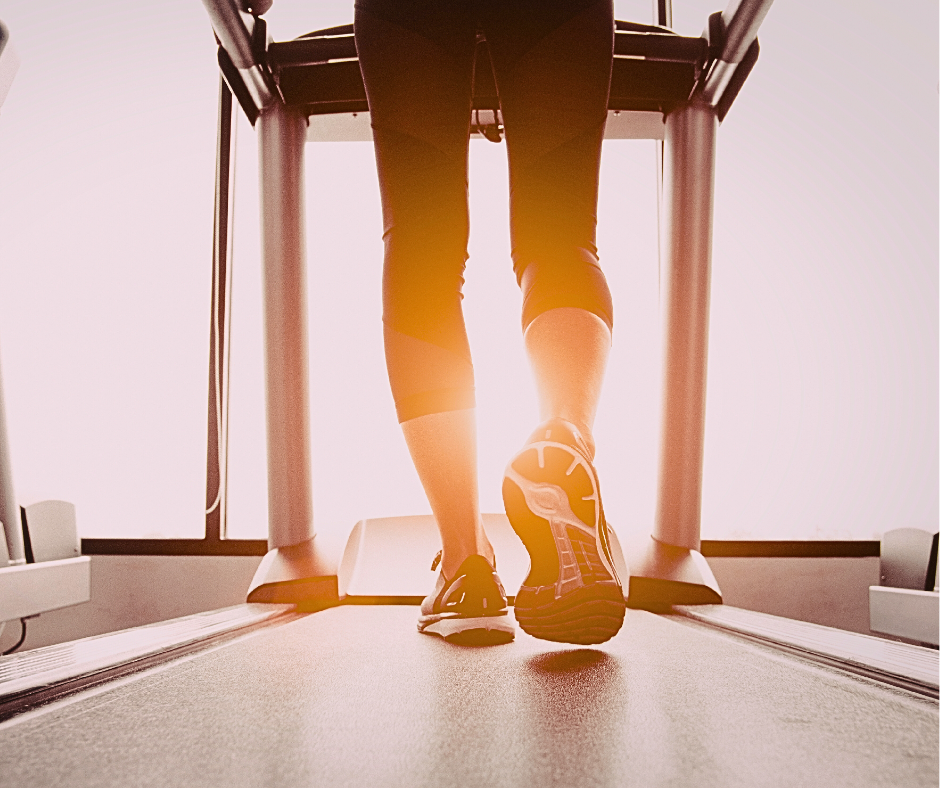
Transitioning from a highly cushioned, shock-absorbing treadmill belt to unforgiving asphalt is a massive shock to your Kinetic Chain. Before you lace up and hit the pavement, run through the following checklist to keep your foundation injury-free.
1. The "Shoe Squeeze" Test
You may have only run all winter indoors, but your shoes are still aged. The EVA foam inside running sneakers degrades over time, losing its crucial rebound.
The Test: Grab your shoe by the heel and the toe, and try to twist it like a wet towel.
Does it fold in half effortlessly? Throw it away. You need a shoe with torsional rigidity to protect your arch from the concrete.
2. Respect the 10% Rule
Treadmill miles do not perfectly translate to road miles. Outside, your feet must constantly micro-adjust to cambered (slanted) roads, curbs, and uneven terrain.
The Rule: Do not increase your weekly mileage by more than 10%.
If you ran 10 miles on the treadmill last week, max out at 11 miles outside this week. Let your bones, tendons, and ligaments adapt to the denser surface!
3. Check for the "Morning Hobble."
Listen to your feet the morning after your run.
· If your first steps out of bed feel like you are stepping on a hot nail, your Plantar Fascia is micro-tearing. This is your body’s early warning system.
· Do NOT try to "run through it."
Stop the Energy Leaks
If you consistently battle knee, shin, or heel pain when running outdoors, the problem isn't the road. It’s your biomechanics.
· If your gait and weight distribution are slightly off, or if you push your mileage too hard on day one, you are laying the groundwork for Shin Splints, Plantar Fasciitis, and Achilles Tendonitis.
· At our practice, we use advanced gait analysis to build Custom Orthotics.
o These prescription devices act as a scaffold for your arch, correcting overpronation and absorbing the shock of the concrete.
· We also make use of minimally invasive technologies and cutting-edge treatments in the non-invasive space, such as EPAT Shockwave Therapy or the Tenex system.
Don’t Wait on Pain
Delaying treatment might keep you out of the action longer, so schedule a spring sports evaluation today! We’ll ensure your foundation is ready for the road.
At The Center for Podiatric Care and Sports Medicine, we offer busy New Yorkers prompt diagnosis and treatments specific to their individual needs. Podiatrists Dr. Jonathan M. Levy, Dr. Nadia F. Levy, Dr. Diane M. Castro, Dr. Josef Geldwert, and Dr. Katherine Lai are eager to help you at our convenient mid-town Manhattan or Upper East Side locations. Contact us today.
